
Distinguishing Zero Traffic from Missing Data in Physical Retail Operations
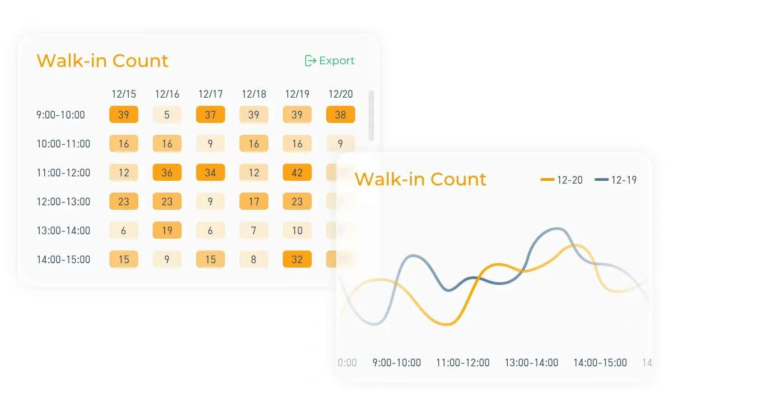
When managing multi-store retail chains, operational dashboards rely on continuous streams of footfall numbers to evaluate store performance, staff productivity, and marketing effectiveness.
However, store operations teams frequently encounter standard reporting periods where customer entry counts drop to zero. Determining whether a zero reading reflects a genuinely empty doorway or a technical interruption in data collection is a vital distinction.
Misinterpreting network dropouts or hardware disconnections as actual zero-visitor periods skews performance evaluation, corrupts sales conversion metrics, and misleads labor allocation decisions.

The Difference Between Operational Reality and System Silence
A true zero-footfall reading indicates that a physical location remained open without receiving walk-in visitors during a specific time window. This usually happens during severe weather conditions, late-night operating hours, or localized access disruptions outside the store entrance.
In contrast, missing data occurs when hardware units disconnect from the network, experience power interruptions, or fail to transmit sensor logs to central management systems.
Treating missing data as zero traffic artificially inflates visitor conversion formulas when point-of-sale transactions are recorded without corresponding walk-in counts. Conversely, if automated analytics systems populate missing periods with zero values, performance dashboards show artificial operational dips that do not reflect true customer behavior.
For regional retail executives and store operations managers, distinguishing between empty doors and missing data streams prevents reactive decision-making. At OVOPARK, we focus on providing edge computing architectures that combine local data storage with intelligent cloud monitoring to maintain complete operational transparency across large retail networks.
Identifying Key Causes of Data Transmission Disruptions
At OVOPARK, we recognize three common areas that retail operators should investigate when football data becomes unavailable: power and infrastructure interruptions, network connectivity problems, and device installation or configuration issues.
Local power outages or unplugged network cables frequently disrupt sensor communication. In high-traffic retail environments, local networks can experience periodic bandwidth throttling or Wi-Fi signal dropouts, delaying data uploads to central management platforms.
When a hardware unit loses connection, central dashboards without edge storage mechanisms lose visibility over foot traffic during the offline window.
Hardware placement and environmental factors also influence data integrity. Obstructions near doorway ceilings, changing ambient lighting, or incorrect tilt angles can compromise sensor detection accuracy.
When evaluating a people counting device, retailers should consider whether it supports local data storage and automatic synchronization after network interruptions. These capabilities can help maintain data continuity, provided they are supported by the specific device configuration.
Reconstructing Operational Context with Edge Architecture
Addressing data gaps across hundreds or thousands of retail stores requires hardware and software built for operational resilience. Utilizing an edge AI platform allows local devices to process algorithm computations directly on-site while sending structured telemetry to cloud management dashboards.
When network connections drop, edge computing devices continue logging entrance activity, dwell times, and demographic parameters with minimal data loss. Once connectivity stabilizes, stored logs are queued for automatic sync to the cloud database, preserving historical accuracy across daily, weekly, and monthly reporting intervals.
An effective recovery workflow should verify more than whether a device is online again. Operations teams should compare the last successful heartbeat, the timestamp of the most recent locally stored event, and the time when cloud transmission resumed.
This helps identify the exact interval affected by an interruption and confirms whether buffered records have arrived. If the recovered dataset contains gaps, duplicated timestamps, or unusually long intervals between events, the period should be flagged for review rather than silently treated as complete.
Applying the same checks across all branches also makes incident comparisons more consistent and supports more reliable reporting.
Integrating our proprietary people counting software provides operational teams with real-time dashboards and automated fault detection. When a store device stops transmitting traffic telemetry, the platform flags the event as an active hardware offline status rather than recording false zero-traffic entries.
Operational managers receive instant notifications to inspect network cables or reboot local equipment, ensuring fast resolution without corrupting performance dashboards.
Practical Steps to Protect Traffic Data Accuracy
Establishing clear data validation practices across physical store chains helps operations teams maintain consistent operational visibility and reliable reporting
Deploy Edge-Enabled Hardware: Choose traffic devices equipped with local memory storage and intelligent AI algorithms to prevent data loss during local network disconnections.
Configure Automated System Alerts: Implement platform notification systems that immediately distinguish hardware offline events from low-traffic store operational hours.
Audit Sensor Coverage Regularly: Conduct routine physical and digital inspections to confirm that doorway sensors remain unblocked, properly angled, and fully connected to store networks.
Unify Traffic and POS Data Streams: Cross-reference hourly foot traffic trends against register transaction activity to detect numerical anomalies before finalizing store KPI evaluations.
Maintaining Uncompromising Clarity Across Multi-Store Operations
In physical retail management, evaluating store success depends on accurate, unbiased data streams. Treating technical data drops as zero-traffic periods obscures real customer traffic trends and weakens confidence in operational reporting across chain locations.
By combining AI-powered people counting with unified cloud management platforms, retail operations gain direct visibility into every physical store. Developing a resilient traffic monitoring infrastructure allows leadership teams to evaluate authentic customer behavior, optimize store scheduling, and drive sustained sales growth across all retail locations.