

Factors Influencing Retail People Counter Accuracy
Understanding customer foot traffic is crucial for modern retail management and intelligent store operations. For retail chains and catering businesses seeking to optimize physical layouts and staff scheduling routines, accurate data forms the essential foundation of strategic decision making.
Store managers rely heavily on traffic analysis to measure daily conversion rates and evaluate long term marketing campaign effectiveness. However, acquiring precise visitor data is often more complex than simply installing a basic camera at the store entrance.
Various external and internal elements can influence the performance of traffic analysis systems, leading to potential data discrepancies over time. Recognizing the specific variables that impact data reliability helps management teams select the right technological equipment and configure their intelligent video analysis systems properly.
By evaluating these contributing factors, retailers can deploy more effective operational strategies to monitor store performance without needing constant manual supervision on site.
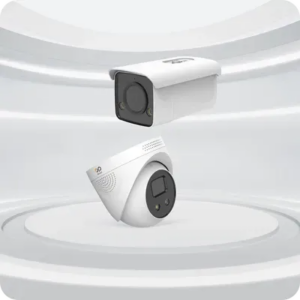
Environmental Variables Impacting Data Reliability
The physical environment surrounding the entrance of a retail store plays a significant role in determining how well tracking systems perform. Variations in ambient lighting can create shadows or intense glare that confuse traditional optical sensors.
Throughout the day, natural sunlight shifts and interacts with artificial indoor lighting, potentially causing basic sensors to misinterpret shadows as actual customers. Furthermore, reflective surfaces such as polished glass doors or large mirrors near the tracking zone can generate phantom reflections that standard cameras might count multiple times.
Physical obstructions also present a common challenge in dynamic retail environments. Hanging promotional banners or seasonal decorations placed excessively close to the entrance can temporarily block the field of view.
When the line of sight is obstructed, devices may fail to register individuals passing through blind spots. Consistency in environmental conditions is rarely possible, which means chosen hardware must adapt to changing light levels seamlessly.
Hardware Quality Of The People Counter
The technological foundation of the physical device dictates the baseline reliability of collected data. Early generation sensors relied on simple infrared beams that would break when a person walked past, frequently leading to miscounts when multiple shoppers entered simultaneously.
Modern retail operations require more sophisticated visual processing capabilities to distinguish between overlapping figures and densely packed crowds. When deploying a modern people counter, the field of view and depth perception of the lens directly influence how well it handles complex traffic flows.
Advanced systems utilize stereoscopic lenses or time of flight technology to create a three dimensional understanding of the entrance space, significantly reducing the chances of double counting or missing individuals walking side by side.
The internal processing architecture inside the device also matters greatly. Devices equipped with robust edge computing capabilities can process video feeds locally, minimizing data loss over fragile internet connections.
Software Processing And Algorithmic Precision
Beyond the physical camera, the underlying algorithms responsible for interpreting visual information are fundamental to achieving high precision. Raw video data requires sophisticated interpretation to separate valuable customer traffic metrics from irrelevant movements.
This is where advanced people counting software becomes an essential component of retail digital transformation. High quality analytics programs utilize machine learning models trained on vast datasets to accurately identify human shapes, distinguishing them from shopping carts or strollers.
An intelligent algorithm can track movement trajectories, allowing the system to filter out staff members who frequently cross the entrance or customers who merely step inside and immediately turn back.
The software must also handle complex scenarios like group shopping, ensuring that a family entering together is counted correctly. Continuous algorithm updates driven by cloud platforms help refine these recognition capabilities over time, adapting to new retail layouts seamlessly.
Installation Layout And System Integration
Even advanced technology can underperform if installation parameters do not align with manufacturer specifications. The mounting height and angle of the camera lens are critical variables that dictate the effective coverage area.
If a device is mounted too low, the field of view may be too narrow to capture wide entrances, resulting in uncounted traffic at the edges. Conversely, mounting equipment too high without appropriate lens focal length can degrade image resolution, making it difficult for analytical models to distinguish individuals clearly.
Network stability also influences data integrity, especially in environments relying heavily on continuous synchronization. While edge computing handles immediate processing, intermittent network drops can disrupt the transmission of compiled statistics to central management dashboards.
Proper integration with existing store infrastructure ensures that data flows smoothly from local devices to enterprise management systems, allowing executives to view synchronized reports across multiple chain locations efficiently.
How OVOPARK Enhances Traffic Analysis Reliability
Addressing these diverse operational challenges requires an integrated approach to retail digitalization and intelligent store operations. As an experienced ODM manufacturer, OVOPARK specializes in providing robust computer vision and edge computing solutions tailored for chain retail, catering, and service industries.
By offering intelligent devices like the PC8 and advanced AI NVR systems, we enables businesses to upgrade existing CCTV infrastructure without requiring large scale hardware replacements. Our unique edge computing combined with cloud platform architecture ensures that data processing happens swiftly on site while management remains centralized.
With a strong focus on algorithmic customization and rapid proof of concept capabilities, their dedicated research and development team helps retailers navigate complex operational hurdles.
By delivering flexible deployment models, they empower brands globally to achieve standardized management, improve operational efficiency, and capture highly reliable visitor analytics essential for sustained business growth.


