Decoding In-Store Engagement: Product Interest vs. Customer Hesitation
Managing chain retail stores, restaurants, and service venues requires a clear understanding of shopper behavior. For multi-unit enterprise managers, observing store floors often reveals a familiar puzzle: a customer standing motionless in front of a specific display for several minutes. Is this extended dwell time a signal of high product interest, or does it indicate customer frustration due to missing price tags or unavailable staff assistance? Without empirical data, store teams are left relying on subjective guesswork to evaluate floor engagement.
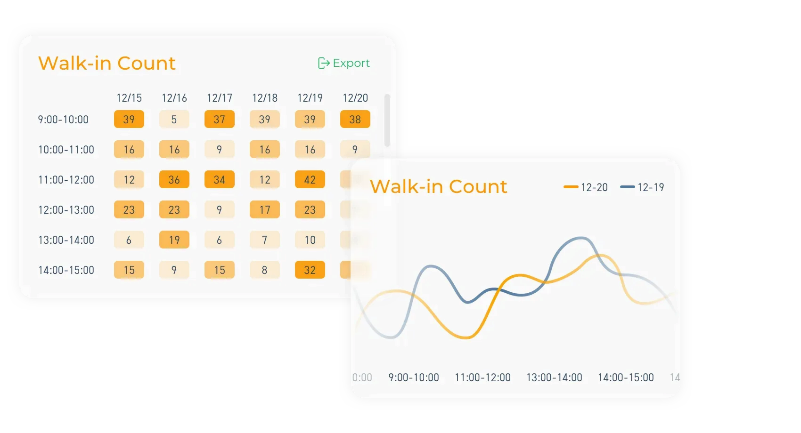
Modern retail digitization bridges this operational visibility gap through hardware and software solutions powered by computer vision. At OVOPARK, our edge AI technologies and intelligent management platforms enable headquarters to transform standard video feeds into actionable operational insights. By connecting analytical terminals to existing camera systems, we help businesses analyze spatial interaction, optimize staffing models, improve merchandise display quality, and support standardized management across large branch networks.
The Challenge of Interpreting Extended Shopper Dwell Time
Evaluating customer floor activity in physical stores has traditionally relied on periodic manual audits or staff observations. These traditional approaches often fail to detect real-time bottlenecks across busy sales floors. When a visitor spends an extended duration in a specific aisle, multiple distinct scenarios may be occurring simultaneously without management’s knowledge.
The shopper might be reading packaging details, evaluating promotional choices, or deliberating prior to purchase. Alternatively, they may be struggling to locate product specifications or waiting for assistance from an available associate. Identifying these subtle operational friction points promptly is critical to preventing lost sales opportunities and maintaining brand standards across distributed locations.
Unclear pricing structures or stock misplacements often turn high-intent shoppers into frustrated visitors who exit without making a purchase. Conversely, high dwell times in well-assisted areas tend to correlate directly with larger basket sizes and higher conversion rates. Distinguishing between product engagement and service bottlenecks requires continuous, real-time spatial oversight that manual floor walks simply cannot provide consistently.
Decoding Shopper Movements with Dwell Time Analytics
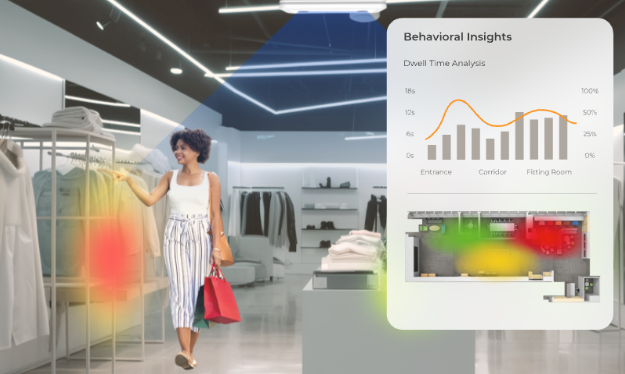
Untangling shopper intent requires analytical precision beyond basic foot traffic counters that merely tally door entries. Implementing our specialized dwell time analytics allows operations teams to measure exact duration times across high-traffic zones, endcaps, and service counters.
By analyzing spatial interaction through localized heatmaps and computer vision algorithms, we help headquarters correlate lingering times with conversion rates. If a specific fixture experiences long stay durations alongside low sales conversions, managers can investigate contributing factors like poor display placement, missing price labels, or stock shortages.
Understanding these dwell dynamics provides retail executives with objective indicators regarding merchandise effectiveness and layout efficiency. Rather than altering store layouts based on intuition, operational managers receive reliable metrics detailing how long shoppers engage with specific product categories. This data-driven clarity enables continuous refinement of endcap placements, promotional signage, and promotional product positioning across all store locations.
Enhancing Operational Precision via Customer Analytics
Beyond localized shelf analytics, enterprise success depends on aligning frontline staffing with actual foot traffic trends. Integrating our comprehensive customer behavior analytics equips decision-makers with continuous data regarding shopper demographic profiles, peak operational hours, and store entry rates.
Our hardware solutions, such as the PC8 customer flow analysis device, utilize edge computing to isolate genuine shopper traffic by filtering out non-shopping passersby, employees, and delivery personnel. These statistics help managers refine staff scheduling and store layout planning based on verified customer activity levels rather than broad estimates.
Combining our traffic counting terminals with network video recorders creates a unified operational control ecosystem across all retail branches. Headquarters can monitor customer flow surges, evaluate entry-to-purchase ratios, and verify that staff availability matches real-time customer volumes. This synchronized approach reduces unnecessary labor overhead while ensuring high-traffic hours receive appropriate service coverage.
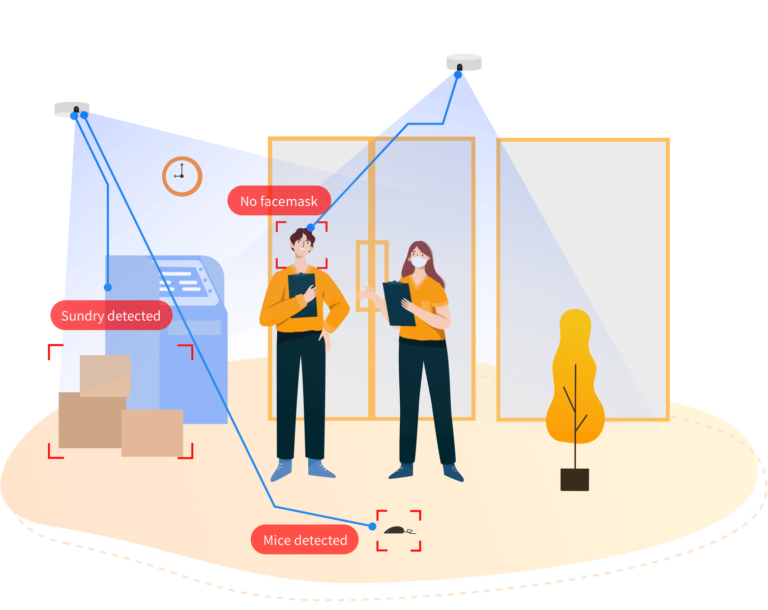
Furthermore, integrating intelligent video analytics enables automated store inspection routines that replace slow manual audits. Management teams gain immediate visibility into shelf stockouts, display non-compliance, and checkout queue congestion across regional store clusters. Resolving these operational hurdles quickly ensures consistent customer experiences and protects brand reputation.
Flexible Deployment and Rapid Operational Integration
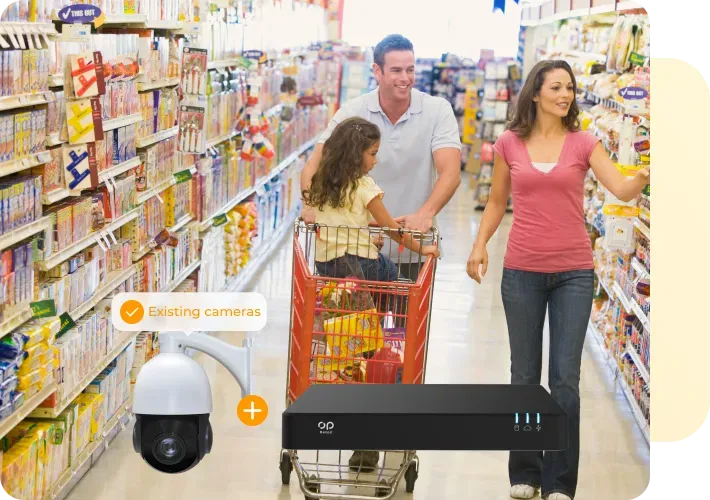
System upgrades often raise concerns regarding capital expenditures and extended installation timelines. We address these barriers by utilizing an “edge computing + cloud platform” architecture that integrates with pre-existing camera infrastructure via ONVIF protocol verification.
This integration path allows enterprise clients to introduce AI store inspection, loss control, out-of-stock monitoring, and employee behavior detection without total hardware replacement. Utilizing a hardware purchase paired with software subscriptions facilitates scalable operational expansion across growing regional store networks.
Around 60% of employees are in research and development roles, custom algorithm adaptation can be executed efficiently. We deliver proof-of-concept deployments and custom model optimization on demand. This rapid deployment structure minimizes operational disruption while delivering verifiable management improvements quickly.
Local data processing at the edge paired with centralized cloud management ensures low network bandwidth usage and fast response times. Regional managers can access standardized analytics dashboards, while local store staff receive real-time alerts regarding operational anomalies. This hybrid deployment framework supports scalable growth for chain retail, pharmacy, convenience store, and catering businesses alike.
Driving Data-Driven Operational Standards
Transitioning physical store management from reactive monitoring to data-driven operational control helps chain enterprises maintain consistent brand standards. Leveraging computer vision platforms allows operational teams to address service delays, refine product merchandising, and maintain store compliance across all network branches.
Empowering regional leadership with continuous analytical visibility fosters a culture of operational accountability and constant optimization. Branch managers can compare floor performance metrics across similar store formats, identifying high-performing layout strategies and replicating them across the network.
With localization service capabilities spanning international markets such as Singapore and Japan, supporting over 5,000 brands and 500,000 stores globally, our edge AI solutions offer a dependable path toward sustainable commercial efficiency and improved customer experiences.