

Optimizing Retail Operations: Choosing Between Edge and Cloud Video Analytics
When a physical store features just a single main door, measuring total visits feels straightforward. However, modern commercial spaces frequently feature complex architectural designs, encompassing primary street entrances, secondary mall accesses, and dedicated exits.
We find that attempting to monitor these diverse entry points using outdated, isolated sensor systems often leads to disjointed data and overlapping counts. Establishing a unified traffic analysis strategy across complex layouts forms the very foundation of intelligent store operations.
By moving away from basic threshold beam counters and embracing advanced computer vision technology, retail executives can achieve comprehensive visibility over their entire physical footprint.
Developing this unified perspective requires an integrated approach to data collection that seamlessly consolidates information from every possible access point into one cohesive operational narrative.
Understanding The Limitations Of Isolated Monitoring Solutions
We often observe businesses attempting to solve complex spatial challenges by simply installing standalone sensors above every door. While this approach seems logical initially, it creates severe blind spots when analyzing the complete customer journey.
If a shopper enters through the front street door, browses the aisles, and departs through the rear mall exit, isolated basic sensors will log two completely separate events. This fragmentation heavily inflates total visitor metrics and actively obscures genuine shopping patterns.
We recommend that operators stop viewing each entrance as an independent zone and start treating the entire store perimeter as a unified monitoring environment. Achieving this level of synchronization requires more than just installing basic optical beams that merely trigger upon movement.
It demands sophisticated visual processing capabilities capable of cross-referencing activity across multiple nodes simultaneously. Upgrading to a cohesive tracking framework prevents duplicated records and provides management teams with a vastly more accurate representation of actual daily store engagement.
Deploying Advanced Hardware For Comprehensive Coverage
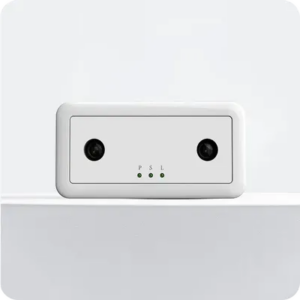
To overcome the challenges of fragmented data collection, we strongly advocate for deploying intelligent people counting hardware designed specifically for complex retail environments. Modern computer vision devices utilize stereoscopic lenses and deep learning models to generate a three-dimensional understanding of any given threshold.
When placed above multiple distinct entrances, these advanced lenses handle dense crowds and overlapping individuals with remarkable precision. The crucial advantage lies in their ability to detect directionality seamlessly, accurately differentiating between incoming and outgoing traffic regardless of which door a customer utilizes.
We have found that deploying unified edge computing devices allows operators to process these complex visual feeds locally, significantly reducing the bandwidth required to transmit large files.
By standardizing the physical tracking equipment across all access points, chain retailers ensure that the baseline data collected remains consistent, regardless of localized lighting variations or unique entrance dimensions.
Synchronizing Data With Intelligent Analytics Platforms
Gathering accurate raw data across various entry points only solves the first half of the operational equation. We find that actionable operational value emerges when businesses funnel this localized information into a centralized people counting system.
Advanced software platforms utilize sophisticated algorithms to stitch together the disparate data streams collected from the primary and secondary doors. This intelligent synchronization allows the software to recognize when a customer enters one zone and exits another, consolidating these actions into a single accurate visitor session.
Furthermore, centralized cloud management allows executive headquarters to view synchronized live traffic flow across their entire global portfolio. Having instant access to these refined metrics enables managers to optimize staff scheduling dynamically, ensuring adequate customer service coverage near the busiest entrances during peak hours.
Funneling unified data into a robust analytics dashboard transforms raw threshold crossings into actionable insights that directly influence daily operational efficiency.
Leveraging Scalable Architectures Without Major Disruptions
A major concern we frequently hear from enterprise executives involves the perceived cost and disruption of upgrading tracking capabilities across massive retail networks. Fortunately, modern technological frameworks allow for seamless integration with existing closed-circuit television infrastructure.
Leading original design manufacturers like OVOPARK excel at providing flexible deployment models that do not require ripping out current camera systems. By utilizing their advanced artificial intelligence network video recorders, businesses can layer sophisticated traffic analysis capabilities directly over their existing hardware.
This “edge computing plus cloud platform” architecture ensures rapid processing on-site while centralizing executive review. Because our dedicated research and development teams support algorithm customization, we can execute rapid proof of concept deployments tailored to exceptionally unique or challenging multi-entrance layouts.
We see that adopting these adaptable solutions empowers retail brands to standardize their management practices globally while keeping initial investment thresholds highly manageable.
Building A Foundation For Intelligent Store Optimization
Transitioning toward a unified traffic analysis strategy ultimately empowers physical retailers to compete effectively in a rapidly shifting commercial landscape. We consistently emphasize that understanding exactly how potential buyers navigate complex store perimeters dictates the success of internal merchandising and staffing strategies.
When chain operators invest in intelligent video analysis systems capable of managing multiple entrances seamlessly, they stop guessing about their baseline conversion rates. This technological upgrade provides the precise, unfiltered operational data necessary to identify underperforming locations and optimize resource allocation rapidly.
Serving thousands of brands worldwide, scalable digital solutions demonstrate that precise visitor tracking forms the bedrock of modern retail success.
By moving beyond isolated doorway metrics and embracing comprehensive spatial analysis, catering and service industries can refine their operational workflows, enhance overall customer experiences, and build resilient physical store strategies for sustained long-term growth.


