
How Retail Traffic Data Helps Retailers Evaluate Marketing Campaign Performance
Retail marketing campaigns can bring more people to a store, but higher sales alone do not explain whether a campaign attracted more visitors. Retailers need to know what happened between campaign exposure, store visits, and final purchases. People counting technology provides traffic data that can help separate these stages. It allows retail teams to compare visitor numbers before, during, and after a campaign.
At OVOPARK, we work with retailers, restaurants, and large chain businesses that need clearer information about physical store performance. Instead of judging a promotion only by revenue, retailers can combine customer flow and sales data. This approach gives marketing teams more context when reviewing campaign results.

Why Sales Data Alone Does Not Tell the Full Story
Suppose a fashion store launches a weekend discount and sales increase by 15%. At first glance, the campaign appears effective. However, sales figures do not show whether the increase came from higher footfall, stronger conversion, or larger purchases from existing customers.
Traffic data adds another layer to the analysis. Retailers can compare the number of visitors entering the store with transactions during the same period. If traffic rises sharply but transactions change little, the campaign may have attracted attention without generating a similar increase in purchases.
The opposite situation also provides useful information. Store traffic may remain relatively stable while sales increase. This could suggest that the promotion influenced purchasing decisions among people who were already planning to visit. Marketing teams can then examine conversion rates and average transaction values for additional context.
Set a Baseline Before the Campaign Starts
Campaign measurement should begin before advertisements, coupons, seasonal displays, or other promotional activities go live. Retailers need a baseline that reflects normal customer traffic under comparable conditions.
For example, a store planning a Friday-to-Sunday promotion can review traffic from several previous weekends. Teams should also consider holidays, weather, store hours, local events, and unusual closures. These factors can affect visitor numbers even when marketing activity remains unchanged.
A useful baseline should match the campaign period as closely as possible. Comparing a Saturday promotion with a normal Tuesday may create a misleading result. Chain retailers can also compare similar locations to understand whether a traffic increase happened across the market or mainly at stores included in the campaign.
Connect Footfall Changes With Campaign Timing
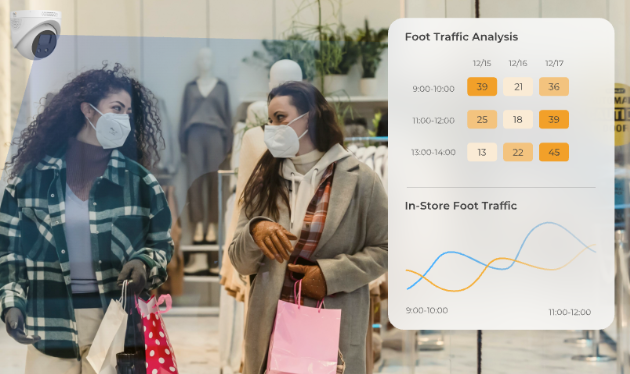
Marketing teams should examine when customer traffic changes, not only how much it changes. Hourly traffic data can reveal whether a campaign influenced visits during specific periods of the day.
Consider a restaurant promoting an afternoon offer from 2 p.m. to 5 p.m. Daily traffic may show only a small increase. An hourly comparison, however, could reveal stronger footfall during the promotional window. This makes the analysis more closely connected to the actual campaign design.
Retailers using a people counting solution can also compare traffic patterns across locations. If a campaign runs in 50 stores, teams can identify which locations recorded stronger changes. They can then compare store type, campaign execution, local traffic conditions, and other factors instead of relying on a single network-wide average.
Measure Traffic Together With Conversion
Visitor numbers become more useful when they are connected with sales results. One practical metric is conversion rate, calculated by comparing transactions with store visitors during the same period.
Imagine that a campaign increases store traffic from 1,000 to 1,300 visitors. If transactions rise from 200 to 210, the campaign generated more visits but conversion declined. This does not automatically mean the promotion failed. It shows that teams should investigate what happened after customers entered the store.
Possible factors include product availability, queue length, staffing levels, promotion placement, and whether the offer matched visitor expectations. People counting technology therefore works better as part of a broader measurement process rather than as an isolated traffic figure.
Use Store-Level Data to Find Different Results
Large chains often face another challenge: the same campaign can perform differently from one location to another. A national promotion may increase traffic in a shopping mall store but show little change at a neighborhood location.
Store-level analysis helps marketing teams avoid treating these results as one outcome. They can group stores by format, region, traffic level, or campaign execution and then compare performance within similar groups.
Intelligent analytics can make large datasets easier to review. By organizing customer flow data, sales information, and store conditions together, retailers can better understand possible reasons behind performance differences. The purpose is to connect traffic changes with business context rather than treat visitor counts as isolated numbers.
Look Beyond the Campaign Period
Campaign analysis should not stop on the final promotional day. Some marketing activities create immediate store visits, while others may influence customer behavior over a longer period.
Retailers can compare post-campaign traffic with the original baseline. If visitor numbers return quickly to their previous level, the campaign may have produced mainly short-term traffic. If elevated traffic continues, teams can examine whether the activity introduced the store to new customers or changed visit patterns.
Consistent measurement methods are important across these periods. For large chains, unified definitions and reporting standards help teams compare different stores, regions, and campaigns more accurately.
Conclusion
Traffic measurement becomes valuable when the findings influence the next decision. Marketing teams can adjust campaign timing, store selection, promotional formats, and media spending based on observed visitor behavior. Operations teams can also use traffic patterns when reviewing staffing and service arrangements during future promotions.
At OVOPARK, our AI retail management work includes customer flow analysis alongside other store operation scenarios. For retailers, the important point is not simply collecting more data. Campaign evaluation becomes clearer when footfall, timing, conversion, sales, and store conditions are examined together.
People counting can therefore answer the central marketing question: did a campaign actually bring more people into the store, and what happened after they arrived? When retailers compare baseline data with campaign-period and post-campaign results, they can distinguish traffic changes from sales changes and gain clearer insights for future marketing planning.