
How Do Edge And Cloud Video Analytics Shape Retail Operations
When upgrading surveillance capabilities, store operators face infrastructure choices that often sound interchangeable but serve distinct analytical purposes.
A common discussion among retail executives involves balancing local video processing with cloud-based solutions. Understanding this distinction is valuable, as suboptimal architectures can lead to latency or bandwidth challenges, whereas a well-designed hybrid setup generally enhances operational awareness.
Transitioning toward intelligent store management means moving past basic observation and establishing hardware standards that systematically evaluate visual evidence without friction.
By examining how modern technologies transform raw video feeds into actionable data, retail teams can better align their daily management routines with broader corporate objectives while keeping initial investments manageable.
Evaluating The Mechanics Of Localized Edge Processing
The fundamental difference between centralized cloud processing and decentralized local handling lies in where the heavy computational lifting occurs. When a manager relies on legacy lenses that stream massive video files to remote servers without local filtering, the underlying network often experiences severe bandwidth strain.
While basic recording handles fundamental security, it rarely provides the real-time feedback needed for dynamic retail environments. Furthermore, relying solely on cloud processing can introduce latency challenges when tracking live operational trends across multiple storefronts.
A structured technical framework instead relies on crisp edge devices that process visual feeds on site, ensuring that every location maintains rapid response times.
Upgrading from unmanaged architectures to smart hardware transforms how regional managers spend their time, shifting their focus from questioning delayed data to proactively managing store environments.
Leveraging Cloud Infrastructure For Centralized Strategic Oversight
Transitioning from basic viewing to structured operational oversight requires a reliable architecture capable of handling continuous video data.We generally recommend deploying sophisticated solutions, such as an advanced video surveillance analytics setup, which forms the backbone of modern commercial security frameworks.
These robust systems allow businesses to centralize management dashboards and maintain stable oversight across expansive layouts without data drops. With reliable synchronization between local nodes and central platforms, operational teams can review both historical footage and live summaries with minimal latency.
Having reliable processing infrastructure eliminates the technical friction that often interrupts daily management routines, ensuring that regional supervisors can conduct thorough reviews whenever necessary.
Investing in dependable video processing equipment establishes a stable foundation for any enterprise looking to modernize its daily oversight without straining internal resources.
Unlocking Deeper Insights Through Comprehensive Software Platforms
The true value of modern monitoring systems emerges when raw visual inputs are synthesized into meaningful indicators that guide strategic decision-making. We frequently observe that physical store operators struggle to extract useful information from hours of unorganized security footage unless they utilize capable software platforms.
By integrating specialized tools through a unified retail analytics platform, management teams can automatically log visual data, track recurring operational bottlenecks, and generate comprehensive compliance reports. Consequently, headquarters can remotely monitor store standards across hundreds of locations, significantly reducing the need for physical visits.
Utilizing advanced technological frameworks empowers retail, catering, and service enterprises to transform ordinary security setups into powerful engines of operational intelligence.
Such digital integration bridges the gap between simple visual observation and profound business growth.
Balancing Edge and Cloud Performance for Operational Efficiency
A primary concern among retail executives involves the operational complexity and bandwidth demands associated with expanding video analytics networks. Many leaders assume that deploying AI analytics requires replacing existing infrastructure with heavy cloud-only streaming or full hardware overhauls.
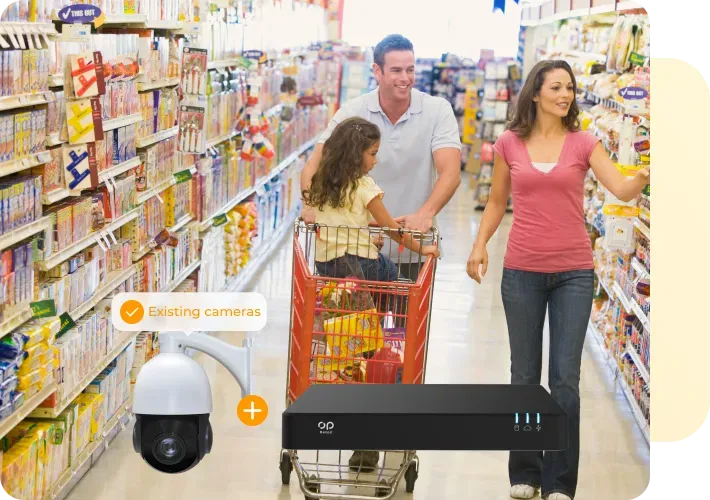
Fortunately, hybrid architectures bridge this gap by connecting existing cameras directly to localized edge computing devices while syncing stats to the cloud. This flexible approach enables retail chains to unlock real-time video intelligence without undergoing costly hardware replacements.
Supported by dedicated engineering teams skilled in custom algorithm integration, brands can seamlessly balance local compute and central cloud management.
Embracing adaptable deployment models ensures that enterprises scale intelligent store operations efficiently while maintaining minimal latency and manageable capital expenditure.
Standardizing Retail Operations with Edge-Cloud Analytics Through OVOPARK
Maintaining consistent operational standards across a massive portfolio of stores remains one of the greatest challenges for commercial franchises. When managers lack real-time synchronization, inconsistencies inevitably creep into how locations execute corporate guidelines.
Integrating an edge and cloud analytics framework helps eliminate these discrepancies by providing centralized, objective metrics. Having served thousands of brands worldwide, scalable architectures demonstrate that localized processing forms the cornerstone of sustainable retail expansion.
By streamlining how video data is synced, businesses empower teams to immediately identify underperforming locations and elevate overall experiences.
Embracing edge computing platforms ultimately equips physical retailers to build highly responsive store environments through OVOPARK.


